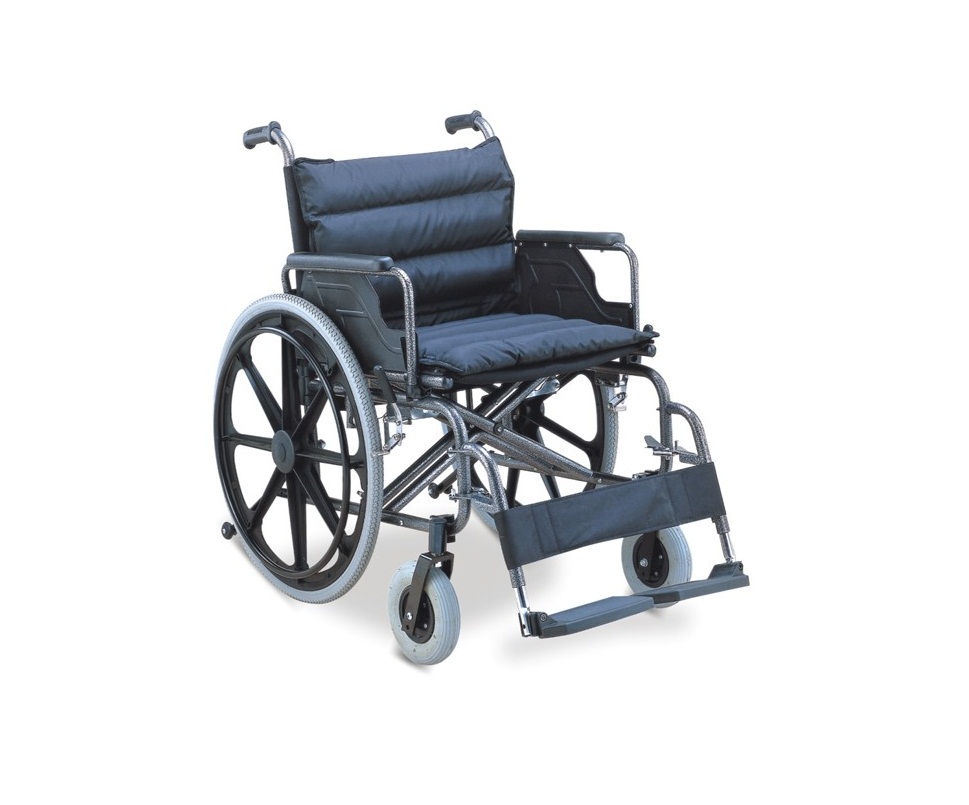
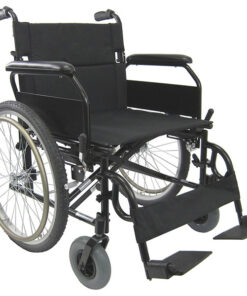
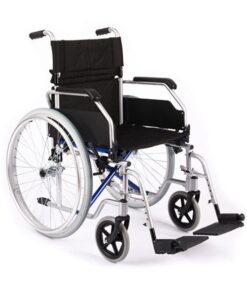
Wheelchair – Steel / Nylon –
R3661,00
Wheelchairs come in various types, each designed to meet specific needs and accommodate different users and environments. Here’s a list of common types of wheelchairs and their uses:
- Manual Wheelchair:
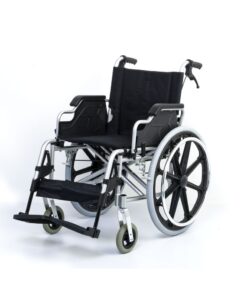
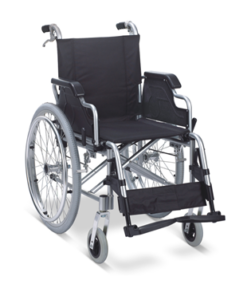
- Standard Manual Wheelchair: Basic wheelchair with two large rear wheels and two small front casters, propelled by the user or pushed by a caregiver. Suitable for users with sufficient upper body strength and mobility.
- Lightweight Manual Wheelchair: Similar to standard manual wheelchairs but constructed from lighter materials for easier maneuverability and transport. Ideal for users who require frequent mobility and independence.
- Power Wheelchair:
- Standard Power Wheelchair: Motorized wheelchair powered by rechargeable batteries, controlled via a joystick or other input device. Suitable for users with limited upper body strength or mobility.
- Travel Power Wheelchair: Compact and lightweight power wheelchair designed for easy transport and maneuverability, often featuring foldable frames and removable components.
- Heavy-Duty Power Wheelchair: Sturdy and durable power wheelchair with reinforced frames and components, designed to accommodate users with higher weight capacities or more demanding usage requirements.
- Transport Wheelchair:
- Transport Chair: Lightweight and compact wheelchair designed primarily for transporting individuals over short distances, often used for travel, medical appointments, or outings. Typically propelled by a caregiver.
- Pediatric Wheelchair:
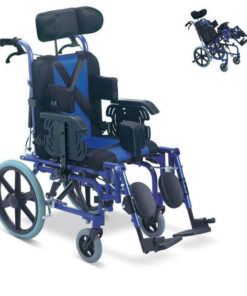
- Pediatric Manual Wheelchair: Scaled-down version of standard manual wheelchairs designed specifically for children, with adjustable features to accommodate growth and varying needs.
- Pediatric Power Wheelchair: Motorized wheelchair designed for children, providing mobility and independence for pediatric users with mobility impairments.
- Reclining Wheelchair:
- Reclining Manual Wheelchair: Wheelchair with a reclining backrest that allows users to adjust their position for comfort or pressure relief, ideal for users who spend extended periods seated.
- Reclining Power Wheelchair: Motorized wheelchair with a reclining feature, offering users the ability to change positions independently or with caregiver assistance.
- Standing Wheelchair:
- Standing Manual Wheelchair: Wheelchair equipped with a standing feature that allows users to transition from a seated to a standing position, promoting better circulation, pressure relief, and social interaction.
- Standing Power Wheelchair: Motorized wheelchair with a standing function, providing users with the ability to stand up from a seated position using powered mechanisms.
- Sports Wheelchair:
- Basketball Wheelchair: Specifically designed for wheelchair basketball, featuring a low-profile frame, angled wheels, and adjustable features for enhanced maneuverability and performance.
- Tennis Wheelchair: Adapted for wheelchair tennis, with a lightweight frame, high-performance wheels, and adjustable seating to accommodate dynamic movements on the court.
- Racing Wheelchair: Streamlined wheelchair designed for wheelchair racing events, featuring a lightweight, aerodynamic frame and large rear wheels for maximum speed and agility.
- Beach Wheelchair:
- Beach Wheelchair: All-terrain wheelchair designed for use on sand, gravel, or uneven surfaces, featuring wide, inflatable tires and corrosion-resistant materials for outdoor use.
Each type of wheelchair serves specific purposes and is designed to meet the unique needs of users in various situations, environments, and activities.
adult wheelchairs
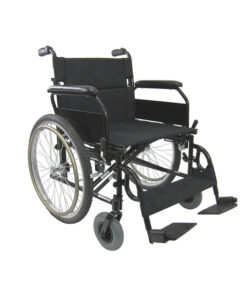
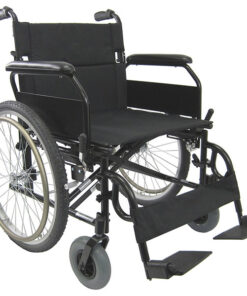
Wheelchair – Steel / Nylon
extra-wide , up to 125kg , detach arm and footrests
Related products
Wheelchairs
R5200,00
R74238,00
R570,00
R2344,00
R569,00
Wheelchairs
R2389,00

Wheelchairs
R3154,00
Wheelchairs
R2353,00